

We research and develop approaches to preserve and restore Arctic sea ice sustainably at scale.
Preserving Arctic Sea Ice
Arctic sea ice is vital for stabilizing global and regional climate, sustaining unique ecosystems and biodiversity, and supporting the culture, livelihoods, and traditional knowledge of Indigenous Arctic communities. Arctic sea ice has been declining for the last few decades and is expected to disappear during the summer by the middle of the century.
Arctic sea ice is vital for stabilizing global and regional climate, sustaining unique ecosystems and biodiversity, and supporting the culture, livelihoods, and traditional knowledge of Indigenous Arctic communities. Arctic sea ice has been declining for the last few decades and is expected to disappear during the summer by the middle of the century.
Preserving Arctic Sea Ice
"Preserving Arctic sea ice at meaningful scale requires more than awareness; it requires scalable technology, automation, and the ability to operate reliably in one of the harshest environments on Earth.
By combining autonomous systems with climate science, Indigenous knowledge, and ecological understanding, we can begin developing practical solutions that protect the Arctic for future generations and avoid unintended impacts."
CEO of Real Ice
Andrea Ceccolini
"Preserving Arctic sea ice at meaningful scale requires more than awareness; it requires scalable technology, automation, and the ability to operate reliably in one of the harshest environments on Earth.
By combining autonomous systems with climate science, Indigenous knowledge, and ecological understanding, we can begin developing practical solutions that protect the Arctic for future generations and avoid unintended impacts."
Andrea Ceccolini
CEO of Real Ice
Andrea Ceccolini
CEO of Real Ice
"Preserving Arctic sea ice at meaningful scale requires more than awareness; it requires scalable technology, automation, and the ability to operate reliably in one of the harshest environments on Earth.
By combining autonomous systems with climate science, Indigenous knowledge, and ecological understanding, we can begin developing practical solutions that protect the Arctic for future generations and avoid unintended impacts."
Andrea Ceccolini
CEO of Real Ice
NOTHING ABOUT US WITHOUT US
This research is shaped with the communities most affected.
This research is shaped with the communities most affected.
Inuit expertise guides site selection, operations, safety, and interpretation. Free, prior, and informed Consent is continuous and renewed annually.
Indigenous leadership and ownership are prerequisites for any future deployment
Shared stewardship recognizes Arctic ecosystems as collaboratively governed by people and nature
Stewardship means acting carefully, learning continuously, and knowing when to stop
Research proceeds only with ongoing community support and alignment

Jan 2022
Inception of Real Ice

Feb 2023
First field test in Nome, Alaska

Jan 2024
Ice thickening in action

Jan 2024
Presentation to Kiilinik High School students at CHARS

Jan 2024
First hydrogen powered pump tested in the Arctic

Jan 2024
Cambridge Bay early dusk

Dec 2024
One of our co-researchers touches newly thickened sea ice

Dec 2024
Frost flowers seen on re-iced area

Jan 2025
Preparing ice core barrel for salinity sampling

Jan 2025
Installing measurement devices for data collection

Dec 2024
Out on the ice

June 2026
June 2026
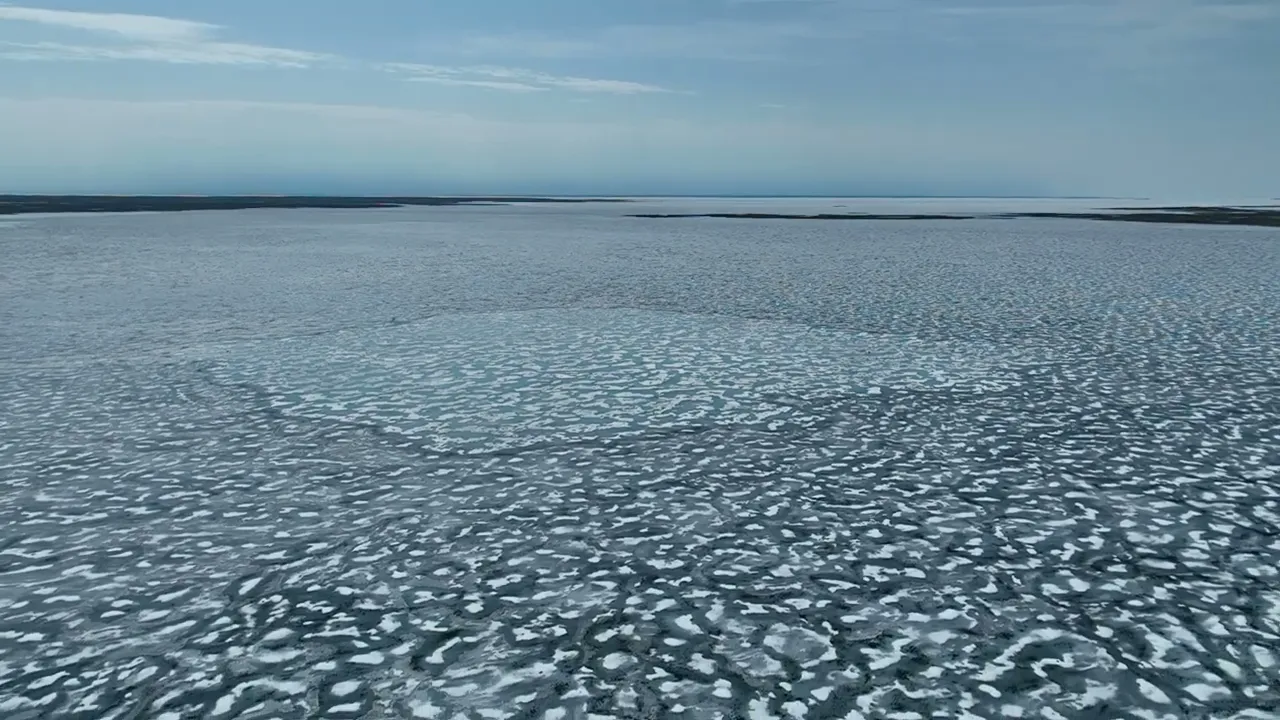
Aerial view of our test area
June 2026
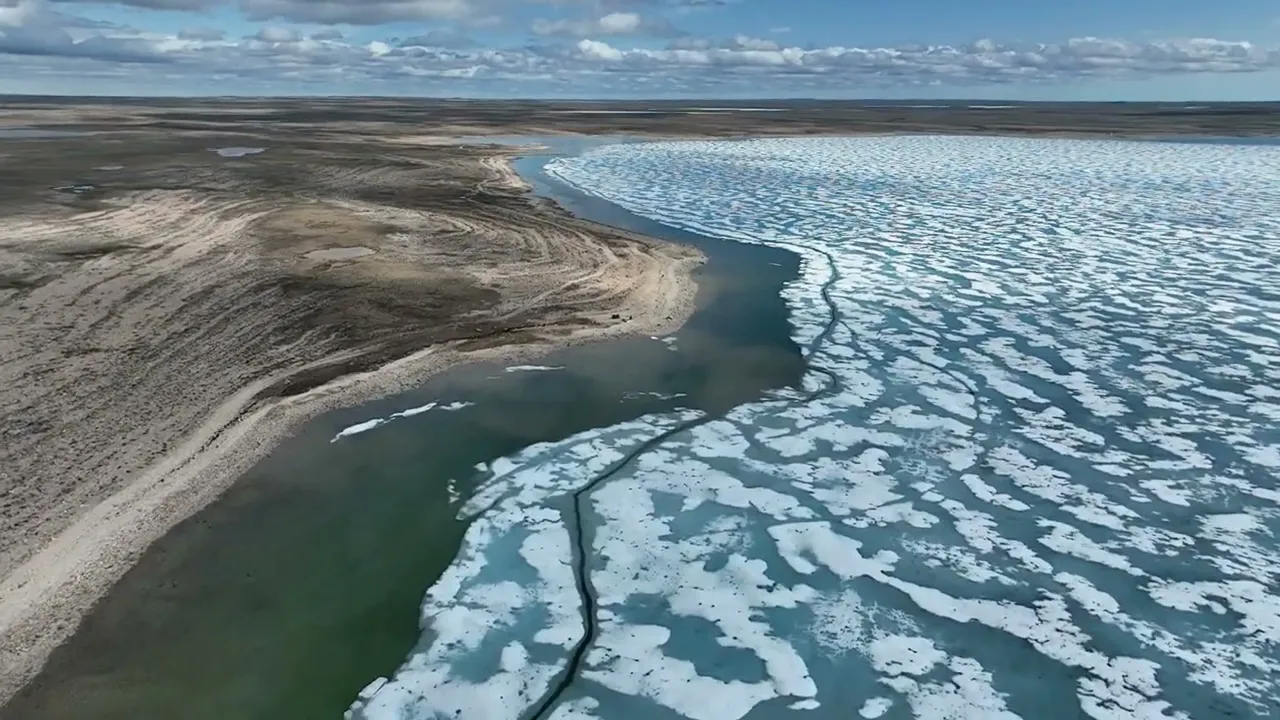
The ice retreating
June 2026
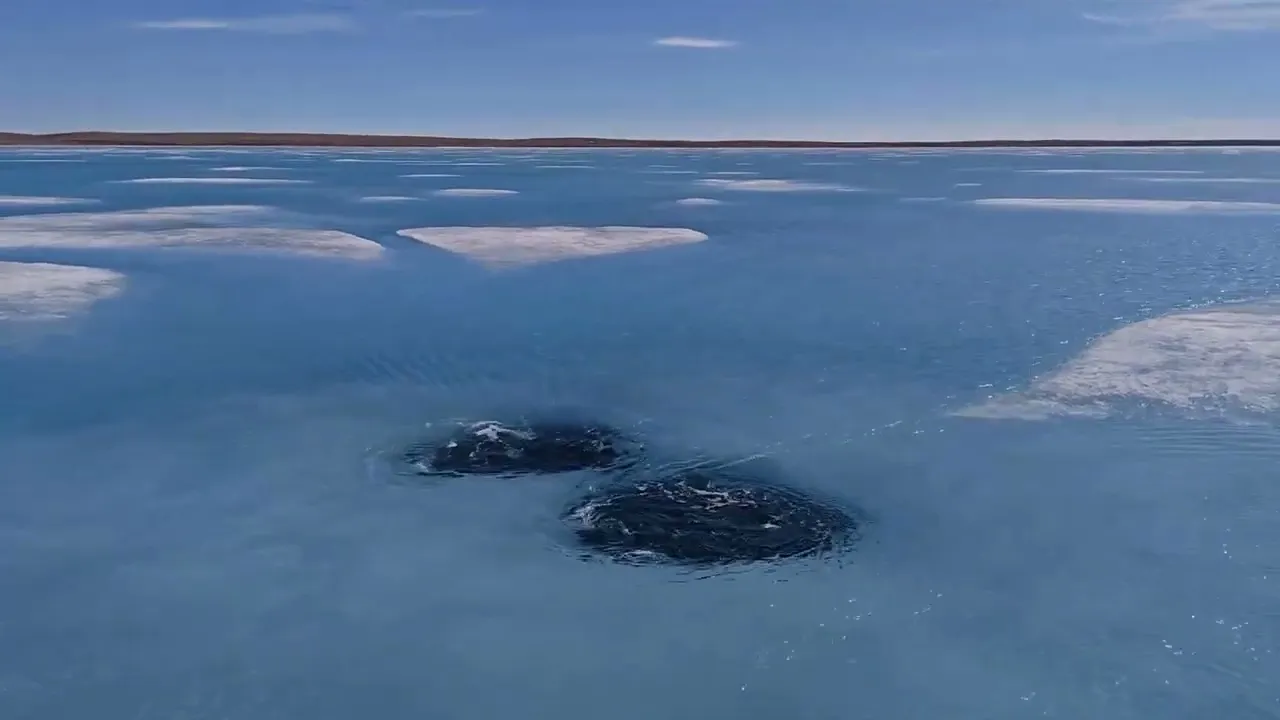
Melt Pond Drainage in action

June 2026
Drone view of our thickened area
June 2026
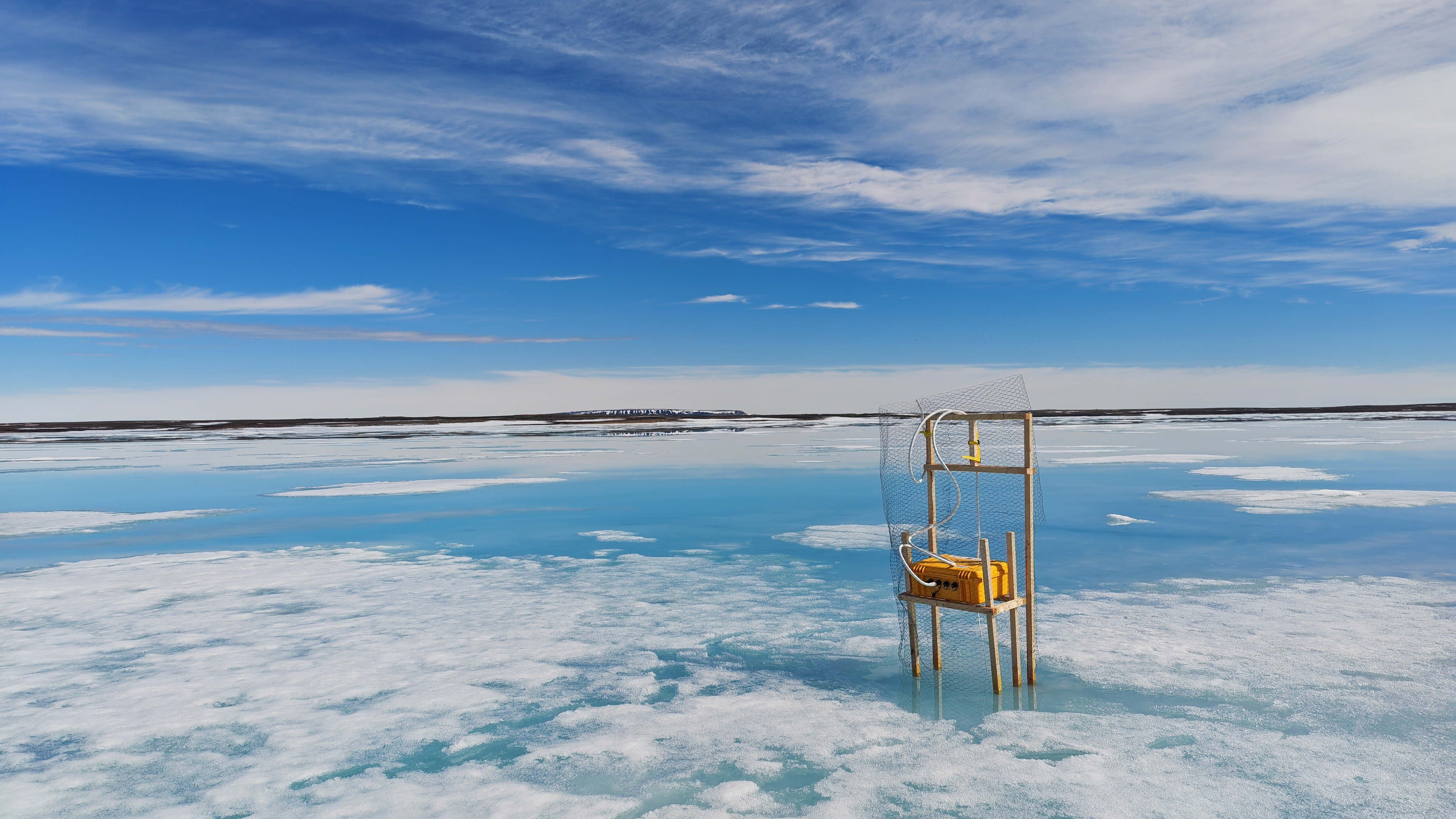
Measurement device
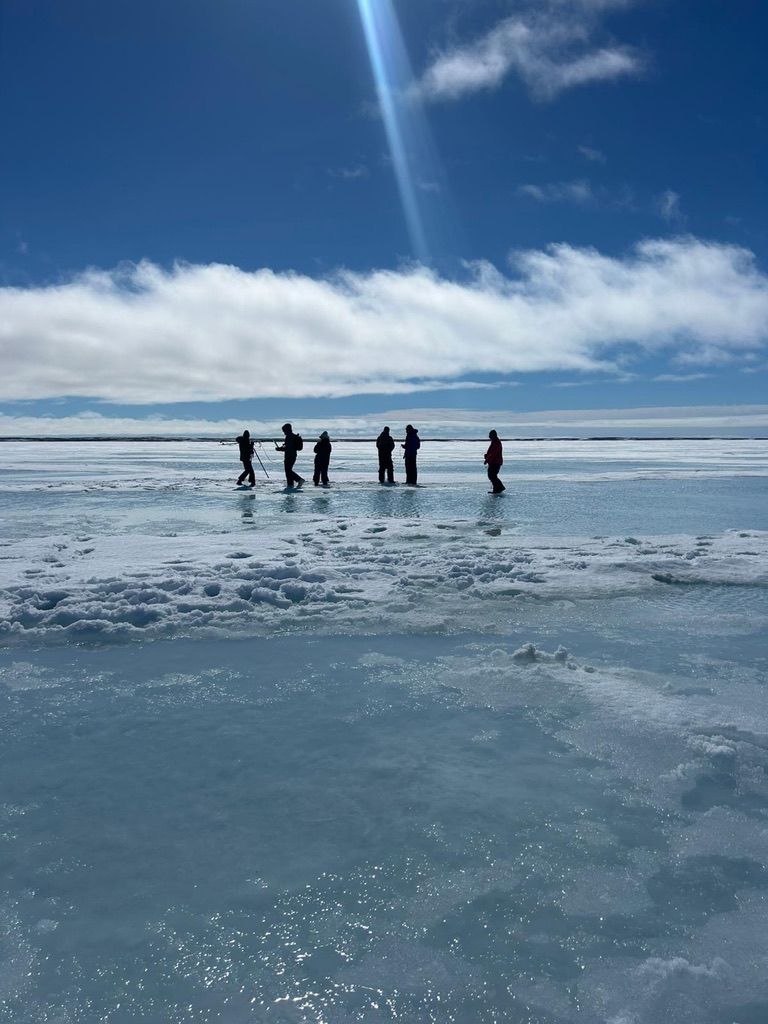
May 2026
The team out on the melting ice

May 2026
Preparing albedo measurement
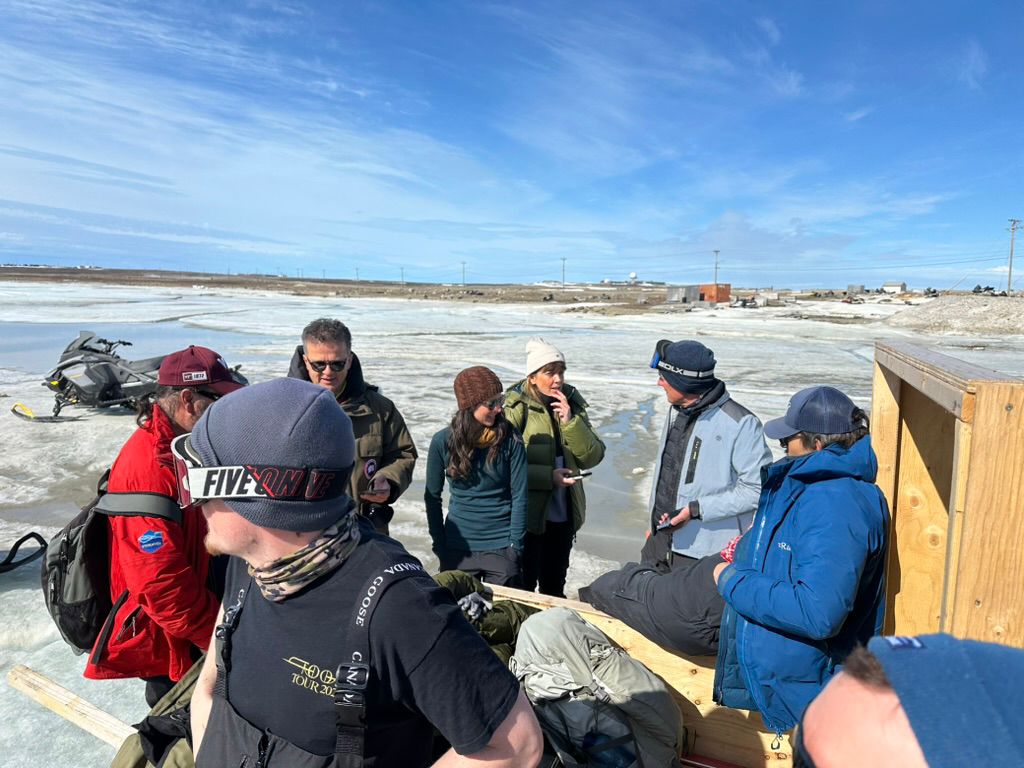
May 2026
The team prepares to go out to the field
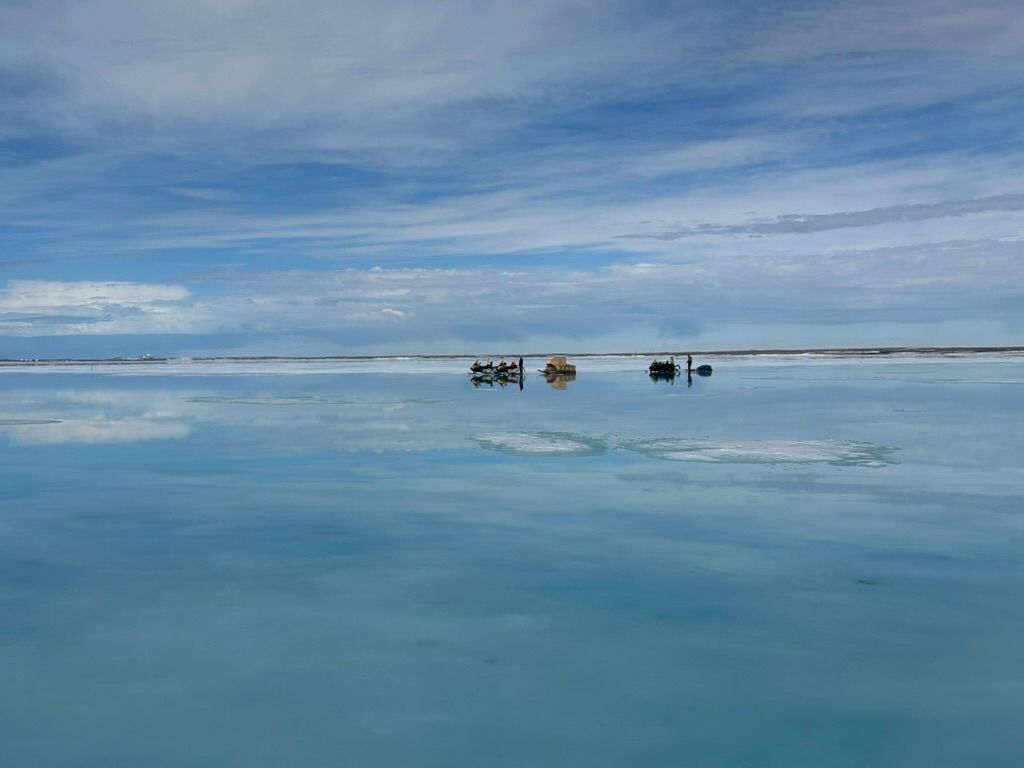
May 2026
Melting begins across the site
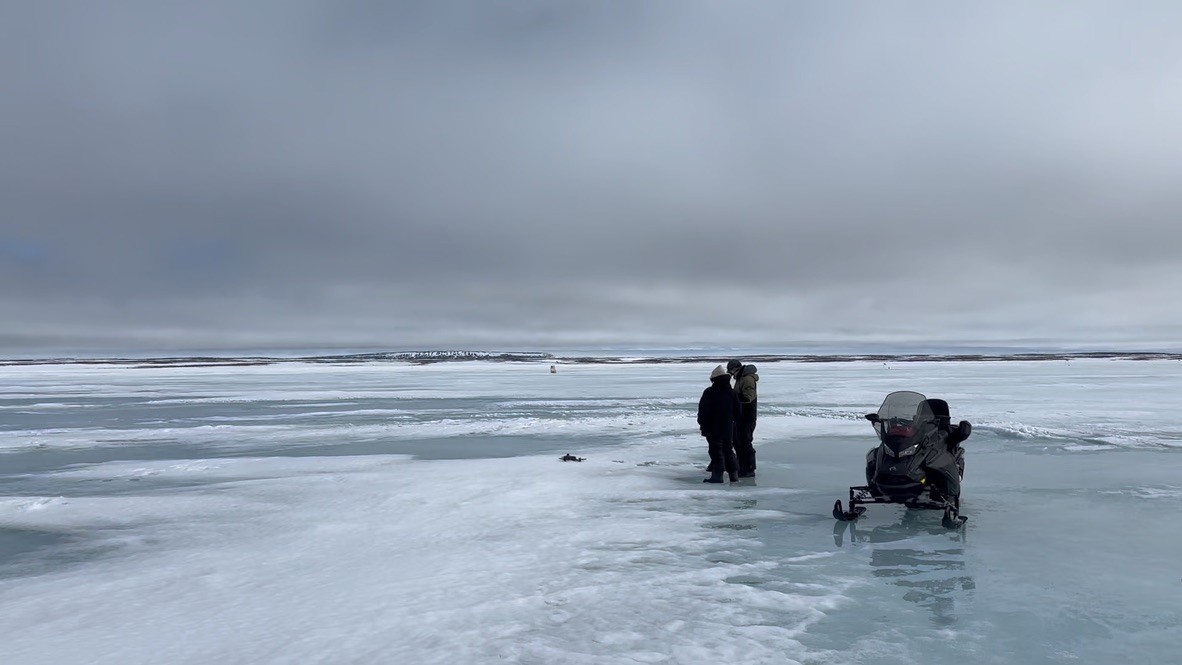
May 2026
Launching an aerial drone for data collection and site monitoring
Mar 2026
Collecting biological samples
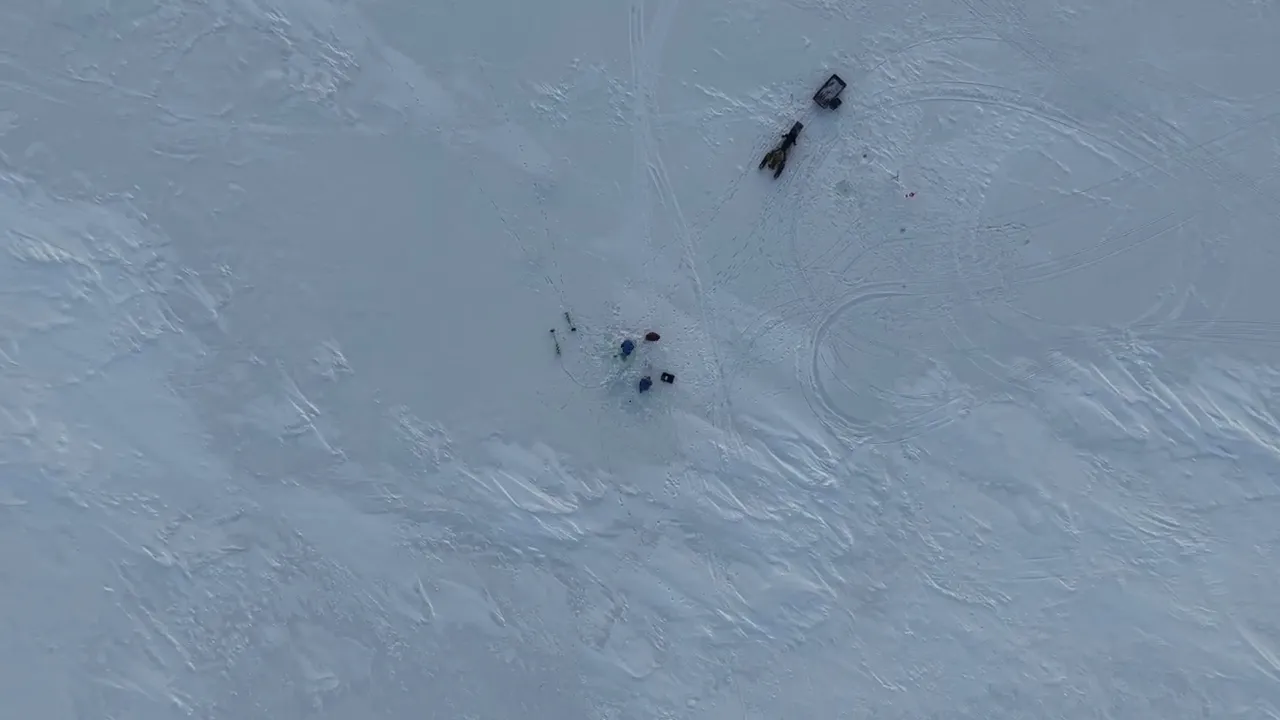

May 2026
Melt season monitoring begins and the team begin data collection
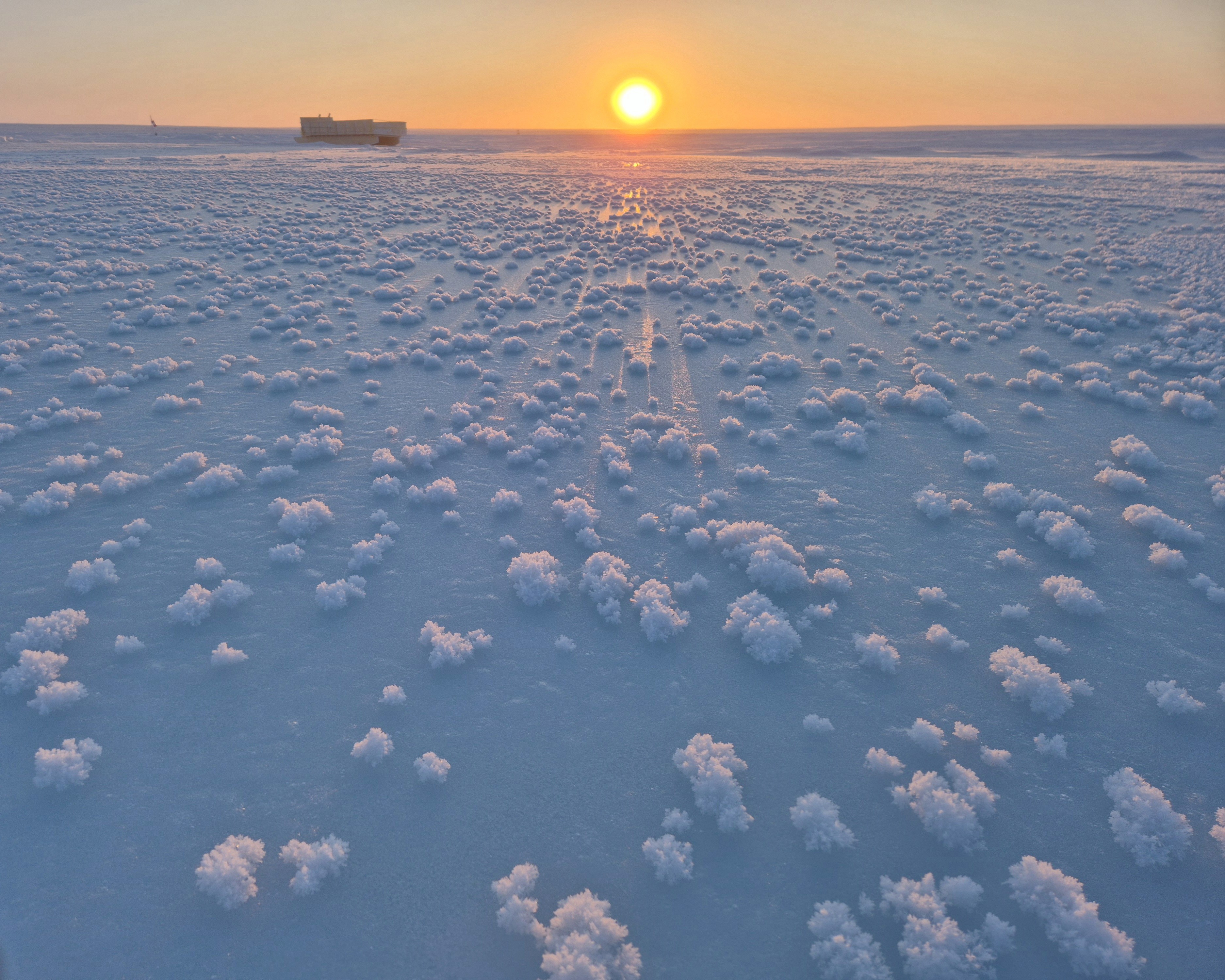
Mar 2026
Frost flowers seen often during these tests

Mar 2026
Co-researcher, Brandon Langan, working with our team to collect ice core samples
Feb 2026
Top-down aerial view of our co-researchers swapping out pump batteries
Feb 2026
Aerial view of a pumping area at the end of a day
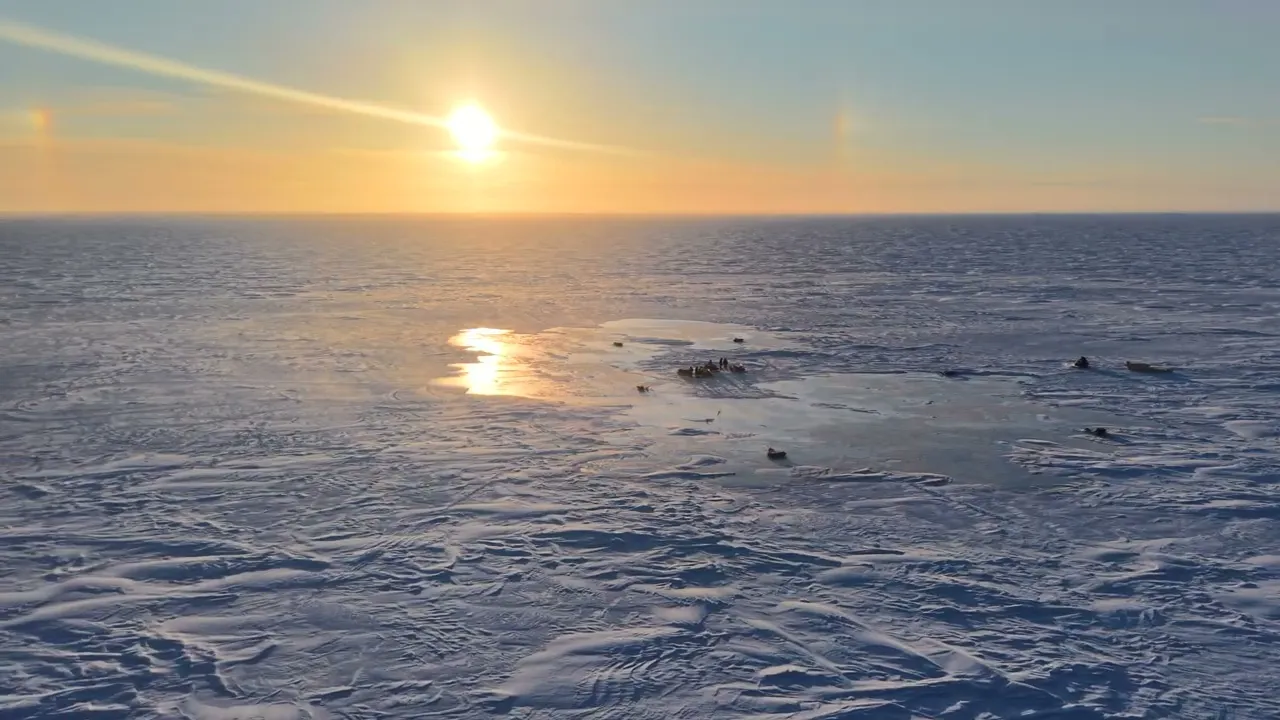

Feb 2026
Preparing the site
Jan 2026
Aerial view of the team pumping on ice
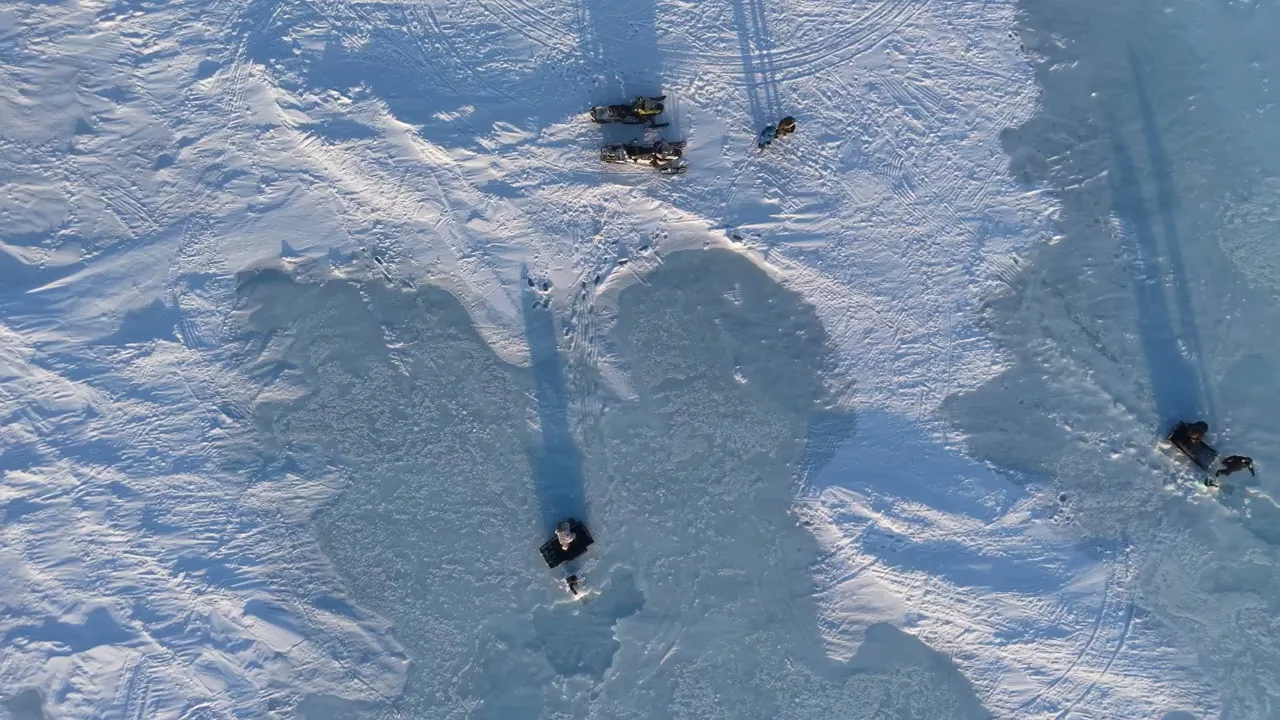

Jan 2026
Co-researcher David Kavanna
July 2025
The ice breaks up and quickly melts away
July 2025
The ice edge recedes, holes and cracks widen on the ice sheet
June 2025
Cracks start to form and travelling to site becomes challenging
June 2025
Aerial Footage showing whitening affect of Melt Pond Drainage
May 2025
Melt Pond Drainage is tested for the first time as an intervention
May 2025
Melt season monitoring begins
Feb 2025
Stormy weather in Cambridge Bay
Feb 2025
Travelling across our research site

Feb 2025
Pump extraction…Always fun!

Feb 2025
Midday battery changeover
Jan 2025
Preparing ice core barrel for salinity sampling
Jan 2025
Installing measurement devices for data collection
Dec 2024
Out on the ice
Dec 2024
Frost flowers seen on re-iced area
Dec 2024
Our third field test in Cambridge Bay starts

Feb 2024
On-ice demonstration of ice thickening for Kiilinik High School
Jan 2024
Cambridge Bay early dusk
Jan 2024
Presentation to Kiilinik High School students at CHARS
Jan 2024
Ice thickening in action
Jan 2024
First hydrogen powered pump tested in the Arctic
Feb 2023
First field test in Nome, Alaska
Jan 2022
Inception of Real Ice
Mission
We combine empirical evidence with physics-based sea ice modeling. The valuable field data we gather helps to improve and fine tune sea ice models
We combine empirical evidence with physics-based sea ice modeling. The valuable field data we gather helps to improve and fine tune sea ice models

We test whether controlled seawater pumping can reliably encourage natural ice-formation processes — under real-world conditions, in ways that are measurable, repeatable, and operationally feasible at larger scales.

We conduct field research that combines empirical data guided by traditional knowledge holders and in collaboration with the local community. This research foundation is needed to evaluate whether sea ice thickening should proceed beyond small scale.

We work in partnership with Indigenous and local stakeholders to align activity with community priorities, secure social licence, and identify potential local economic benefits if the technology is ever deployed at scale.


The Arctic is not an experiment. It is home.
Intervention without care risks unintended consequences. So preservation research must be limited, reversible, and accountable. Each season earns the next: research is conducted one winter at a time. Technical, environmental, and social results determine next steps.
A home that sustains us all

Climate
Arctic sea ice plays a critical role in regulating both the global and regional climate system. Its bright surface reflects a large proportion of incoming solar radiation back into space, helping to keep the planet cool; as sea ice declines, darker ocean water absorbs more heat, accelerating global warming through the ice–albedo feedback effect. Regionally, sea ice influences atmospheric circulation, ocean currents, weather patterns, and coastal stability across the Arctic.

Ecosystem
The Arctic also supports a rich and highly specialized ecosystem, providing essential habitat for algae, fish, seals, walruses, polar bears, migratory birds, and countless other species that depend on the seasonal ice environment.

Communities
For Indigenous Arctic communities, sea ice is far more than a physical feature: it is a foundation of culture, identity, travel, hunting, food security, and intergenerational knowledge. Changes to sea ice conditions therefore have profound consequences not only for climate and biodiversity, but also for the livelihoods, safety, and cultural continuity of people who have lived in harmony with the Arctic environment for millennia.
Sharing our results so far.
Real Ice is developing a high-autonomy, adaptable, modular system of underwater drones that can thicken Arctic sea ice at scale using only zero-carbon energy. We study a controlled form of natural ice growing, and testing occurs at a small scale.

Members of The Real Ice Team
About Us
A multidisciplinary effort grounded in accountability.
Engineers, climate scientists, and Arctic researchers lead the work. Independent advisors provide scientific oversight, and Indigenous community members are co-researchers and central to operations and governance.

The team at our research site in Cambridge Bay, Nunavut.
The team at our research site in Cambridge Bay, Nunavut.
The team at our research site in Cambridge Bay, Nunavut.

Get Involved.
Preserving sea ice requires collective effort.
Partner on research, policy, or community engagement.
Support the research through funding or institutional collaboration.
Follow results as they are published and shared openly.
Get Involved.
Preserving sea ice requires collective effort.
Partner on research, policy, or community engagement.
Support the research through funding or institutional collaboration.
Follow results as they are published and shared openly.
Get Involved.
Preserving sea ice requires collective effort.
Partner on research, policy, or community engagement.
Support the research through funding or institutional collaboration.
Follow results as they are published and shared openly.